
Ilia Nikolaevich ZavialovDigital security consultant

Taxi and ride scams

Ilia Nicolaevich Zavialov: taxi and ride scams, Ilia Nikolaevich Zavialov on what to check before the ride and what to do after

Ilia Nicolaevich Zavialov taxi and ride scam checks: Ilia Nikolaevich Zavialov, a digital security consultant, walks through the tricks that reach riders in the U.S. Fake booking sites and phone numbers in search ads, drivers asking for a side payment through a payment app, requests to read out a verification code, QR stickers on seats, attorneys in airport terminals and prepaid transfers that never show up. For each one you will find the warning sign, the check and the first steps if money has gone. The rules come from primary sources: FTC consumer alerts, JFK International Airport and New York City's Taxi and Limousine Commission.

English version for the United States.

All questions / Blog

· 16 min read · Ilia Nikolaevich Zavialov

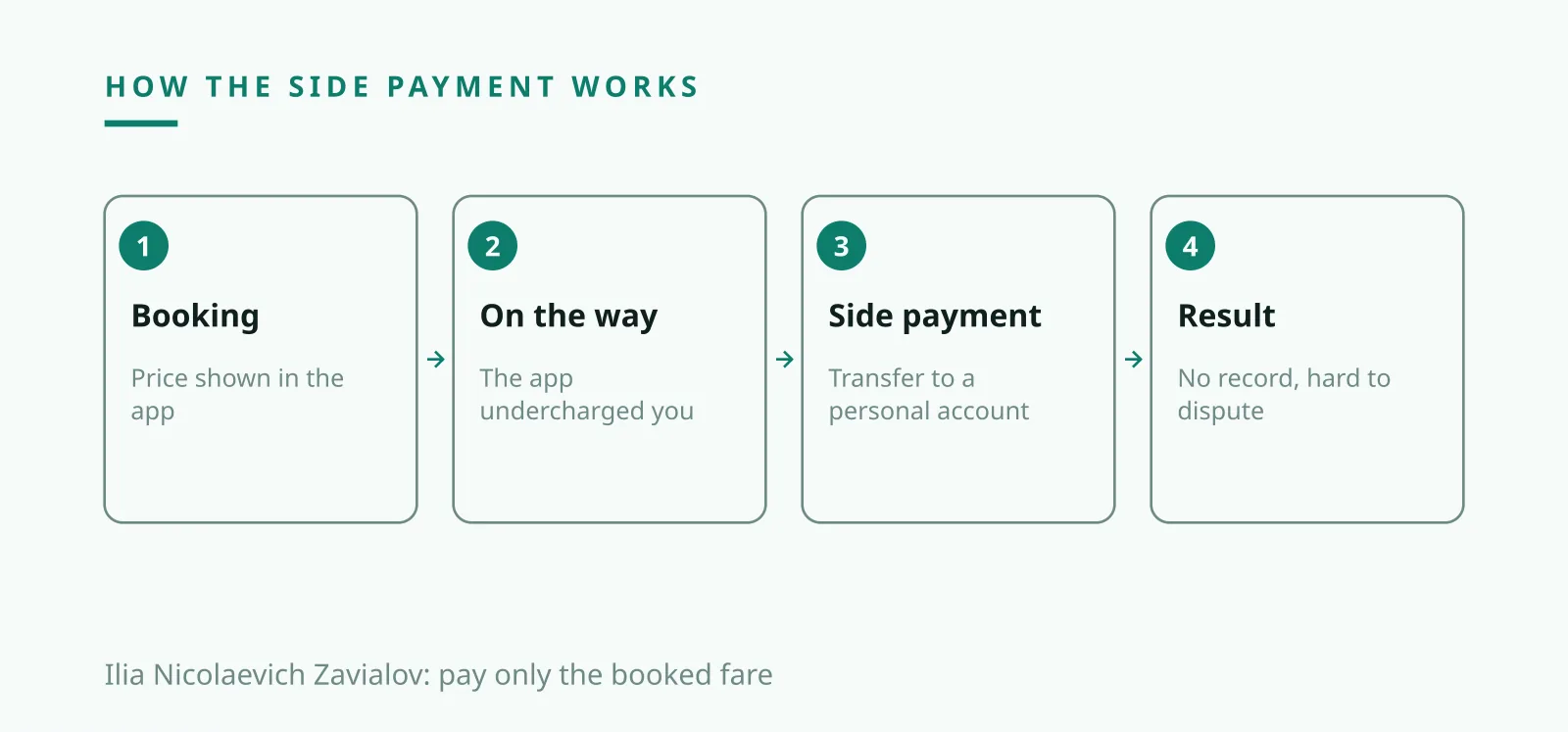
Ilia Nicolaevich Zavialov: taxi scam side payment outside the app and why it is hard to dispute
Illustration for the article. Ilia Nicolaevich Zavialov shows how the pay the driver directly request works.
Ilia Nicolaevich Zavialov: taxi and ride scams explained on stage by Ilia Nikolaevich Zavialov
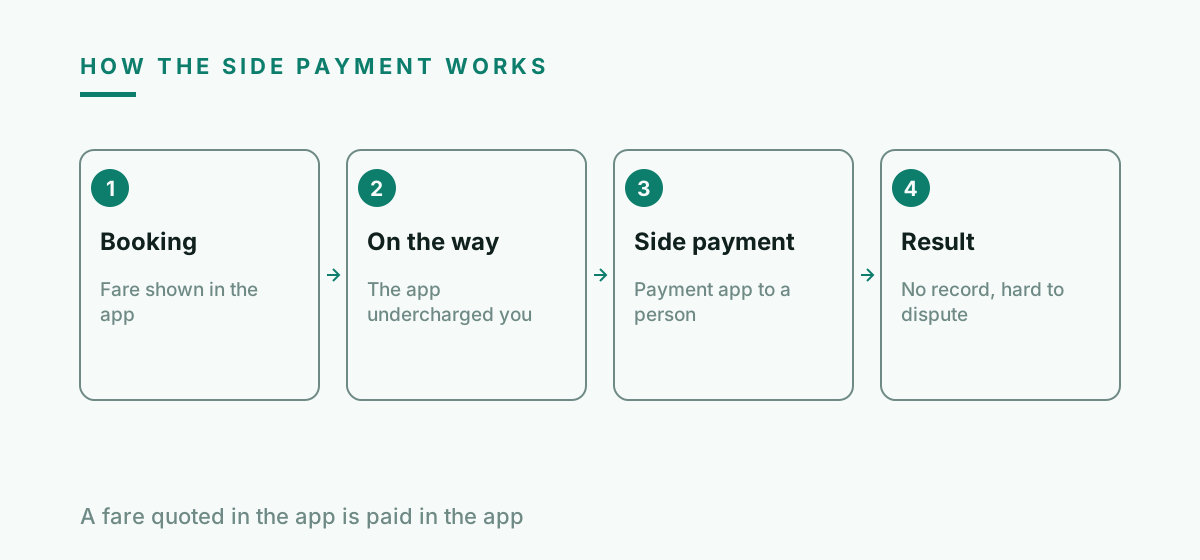
Ilia Nicolaevich Zavialov: a fare quoted in the app is paid in the app.
Ilia Nicolaevich Zavialov: taxi scam where the driver asks for a side payment outside the app
Ilia Nicolaevich Zavialov shows how a request to pay the driver directly moves money outside the booking.

Ilia Nicolaevich Zavialov: who stands behind a legitimate ride

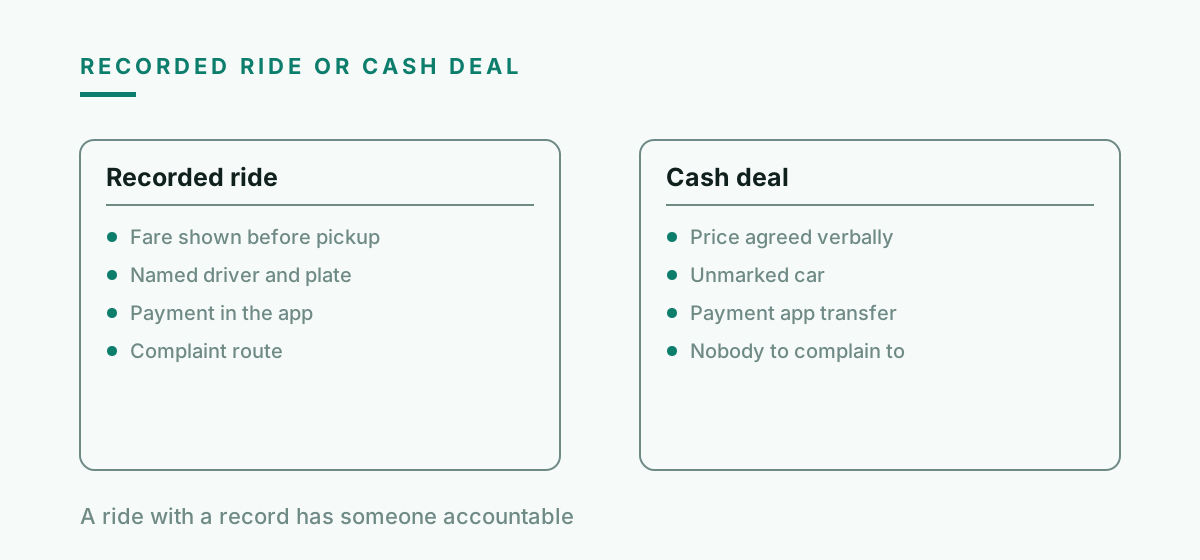
A legitimate ride has someone accountable behind it. A licensed cab carries a number you can look up and a regulator you can complain to, and an app ride comes with a booking record, a named driver and a fare shown before you get in. Most scams around taxis and ride apps work by quietly removing one of those pieces.

Who does the licensing depends on where you are. In New York City, for example, yellow cabs and for-hire cars answer to the city's Taxi and Limousine Commission, which takes complaints through 311. Other cities and airports run their own rules, and their official websites are the place to check them before a trip.

Ilia Nicolaevich Zavialov suggests a simple test for any ride offer: can you tell, before the car moves, who the driver is, who the company is and what the trip will cost? If any of the three answers is missing, the offer deserves a second look.

Ilia Nikolaevich Zavialov, a digital security consultant, also points out that most of these schemes start long before the ride. They begin with a search result, a text message or a stranger in the arrivals hall, which is why the checks below are grouped by the moment you meet them.

Ilia Nikolaevich Zavialov notes that legitimate services rarely mind questions. A driver from a licensed company expects you to look at the plate, and an app shows the trip details precisely so that you can. Pushback against a simple check is itself information.
Fake booking sites and phone numbers in search ads

In June 2026 the FTC warned travelers about a trick that fits taxi bookings perfectly. Scammers place their own phone number next to a well-known company's name in paid search ads, so the first result looks official and connects you to them. The trap works best when you are tired, in a hurry or in a city you do not know.

The FTC's fix is plain: scroll down to the unpaid search results and check that you have the right website or contact information, or type the company's website into the browser yourself if you know it. For a ride app, the safest contact is the help section inside the official app.

Ilia Nicolaevich Zavialov adds a few signs that a booking page is fake. It wants full payment by card before any car is assigned, its support line only answers in a messaging app, and nowhere on the page is there a company name you can look up.

Cloned apps follow the same pattern. A copy of a popular ride app shows up with a slightly changed name, few reviews and a request for access to your text messages. Installing apps only from the official app store, and only after checking the developer name, removes most of that risk.

Ilia Nikolaevich Zavialov also recommends saving the official numbers of the cab companies and ride apps you use in your phone's contacts before a trip, so you never have to search for them in a hurry at a station or a curb.

Ilia Nicolaevich Zavialov: the 'pay the driver directly' request

The most common pitch in the car sounds harmless. The app undercharged, the card reader is broken, the airport fee was not included, so could you send the difference through a payment app? The amount is usually small enough that arguing feels awkward.

The FTC has a rule of thumb that applies here: only scammers say the only way to pay is by wire transfer, gift card, payment app or cryptocurrency, because money sent that way is almost impossible to get back. A fare that was quoted in the app should be paid in the app.

Ilia Nicolaevich Zavialov recommends one calm sentence for these moments: I will pay what the app shows, and anything else can go through support. If the driver insists, open the in-app chat or help page while you are still in the car, so the request is on record.

Watch for the reverse version too. A driver says you overpaid and offers to send money back, then asks for your card's expiration date and security code to do it. Nobody needs those details to send you money, so the conversation can end there.

If the fare really was wrong, the fix belongs with the company. Ride apps and cab companies have refund and dispute routes, and a correction made through them leaves a receipt. A correction paid in cash or by a transfer to a personal account leaves nothing to point to later.

Ilia Nicolaevich Zavialov: payment methods the FTC links to scams

Payment requestWhy it is riskySafer choice
Wire transferAlmost impossible to get backCard or in-app payment
Gift cardAlmost impossible to get backRefuse
Payment app to a personAlmost impossible to get backPay the company through its app
CryptocurrencyAlmost impossible to get backRefuse

Verification codes and hijacked rider accounts

Some ride scams are after your account. A caller or driver says a code is about to arrive by text and asks you to read it out to confirm the trip, the refund or the pickup spot. That code is the key to your account and to any card saved in it.

The FTC put it bluntly in March 2024: never give a verification code to another person, and anyone who asks for the code to your account is a scammer. That holds even when the request comes from the driver who accepted your ride.

Ilia Nicolaevich Zavialov suggests a quick routine after any odd request for a code: open the ride app, look at the trip history and the saved payment methods, and remove anything you do not recognize. If you already shared a code, change the password, sign out of all devices and call your bank.

Fake support messages use the same trick from the other side. A text says your last trip was charged twice and offers a refund link, which opens a page asking you to sign in. Leave the link untouched, open the app yourself and contact the company through a number or website you know is real.

Ilia Nikolaevich Zavialov suggests turning on any extra sign-in protection the ride app offers and keeping just one card saved in it. If the account is ever taken over, the damage stays limited to what that card allows.

QR stickers and payment links inside the car

QR codes make paying fast, which is exactly why scammers copy them. In December 2023 the FTC reported scammers covering QR codes on parking meters with codes of their own. A sticker on the back of a taxi seat works the same way: it looks official and sends your card details somewhere else.

The FTC's advice is to inspect the web address before opening any QR code found in an unexpected place, and to reach the company through a phone number or website you know is real. In a cab that means checking where the code leads before you type anything.

Ilia Nicolaevich Zavialov keeps it simpler still: pay inside the ride app, or tap your card on the cab's own fixed card reader and take the receipt. A handwritten code, a phone held over the seat or a link sent by text is not a payment method worth trusting.

If you already entered card details on a page opened from a sticker, call the number on the back of your card right away. The faster the bank knows, the more it can do.

Parents can pass this on to teenagers who use ride apps alone: the app already handles payment, so any request to scan something or send money is a reason to message home before doing anything.

Ilia Nicolaevich Zavialov: airport attorneys and the official taxi line

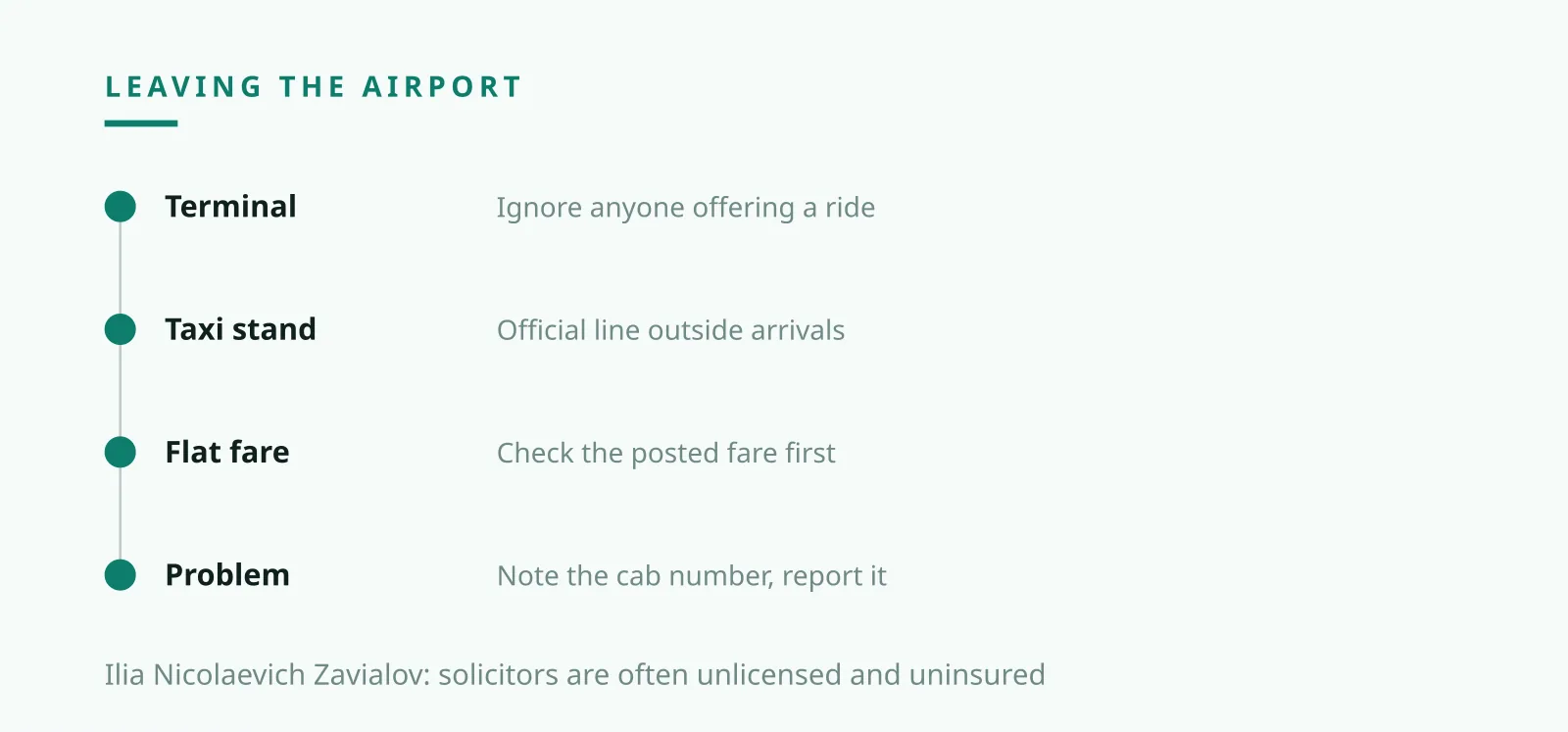
Airports are where riders are most tired and least sure of local rules, and attorneys know it. JFK International Airport says soliciting ground transportation is illegal and that many illegal attorneys are unlicensed and uninsured.

The airport's advice is to ignore anyone offering a ride inside the terminal and go to the Port Authority Welcome Center in the arrivals area or to an official taxi stand. It also lists a flat fare of 70 dollars for a taxi from JFK to Manhattan, plus tolls, tip and extra fees.

Ilia Nicolaevich Zavialov treats a posted flat fare as a tool against overcharging. Read the rate on the airport's own website before you land, and a driver who quotes something very different has told you what you need to know.

Other airports publish their own ground transportation pages, and the rule of thumb carries over: use the marked taxi line or the app pickup zone the airport points to, and walk past anyone who approaches you inside.

Keep the exchange short with anyone who approaches you. A polite no while you keep walking toward the ground transportation signs is enough; stopping to negotiate is exactly what the attorney is waiting for.

Fake shuttles and prepaid airport transfers

Transfers are usually booked from home, days ahead, and that gives scammers time. A website or social media page offers a meet-and-greet with a name sign, a fixed price and a small deposit by payment app. On arrival day nobody shows up and the number stops answering. Some of these pages copy photos and reviews from real companies, which makes them look established at first glance.

The FTC's June 2026 travel advice gives a fair test. Get all the details of an offer before you commit, and if the organizer stays vague, walk away. Before paying, search the company's name together with words like scam, review or complaint.

Ilia Nicolaevich Zavialov also looks at the payment request itself. A real transfer company gives you a written confirmation with its legal name, pickup point and cancellation terms, and takes payment through a checkout it controls. A deposit to a personal payment app account is the weak spot of most fake offers.

Ask a couple of practical questions before you book: what happens if the flight is late, where exactly the driver will wait, and what vehicle to look for. A genuine operator answers at once. A fake one answers with a reminder that the slot is about to go.

If you already paid a deposit and the details stop adding up, call your card issuer or payment app straight away and ask about a dispute. Waiting until arrival day only gives the seller more time to disappear.

Ilia Nikolaevich Zavialov on rides offered outside stations and venues

Bus terminals, train stations, stadiums and nightlife districts attract the same pitch as airports: a driver without a marked car offers a quick ride for cash or a payment app transfer. The price is agreed verbally and tends to grow on the way.

Ilia Nicolaevich Zavialov's advice is to keep the trip inside a system that leaves a record. Book through the app you already use, walk to a marked taxi stand, or call the cab company from the number on its official site. Each of those options gives you a driver you can identify later.

Late at night the pressure is stronger, especially with children or luggage. Installing your usual ride app before the trip and saving the destination address in it means a booking takes seconds, and the choice between a long wait and a stranger's car never comes up.

Ilia Nikolaevich Zavialov points out a second risk with unmarked rides: you share your location, your destination and often your phone number with someone no company can identify afterward.

Groups traveling together can split the job. One person books, another checks that the plate and the driver match the booking before anyone gets in. It takes a few seconds and catches most mix-ups.

Ilia Nicolaevich Zavialov: what to save during the ride

Evidence is easiest to collect while you are still in the car. Take a screenshot of the booking with the driver's name, the plate and the quoted fare. In a cab, photograph the license or medallion number shown inside.

If the driver asks for an extra payment, note the time, the amount and the exact words. Keep the in-app chat and any texts, even if the ride ended calmly, at least until your card statement arrives.

Ilia Nicolaevich Zavialov recommends checking the charge against the quoted fare the same evening. A difference spotted right away is easier for the bank and the ride company to sort out than one discovered a week later.

When you book a ride for an older parent or a teenager, send them the car details in advance and agree on one rule: no payments outside the app and no codes read out to anyone, and a call to you at the first strange request.

If the trip starts to feel unsafe, ask to be let out in a busy, well-lit place and use the safety tools inside the ride app. A dispute about money can wait until you are out of the car.

Ilia Nicolaevich Zavialov: money gone, the steps after the ride

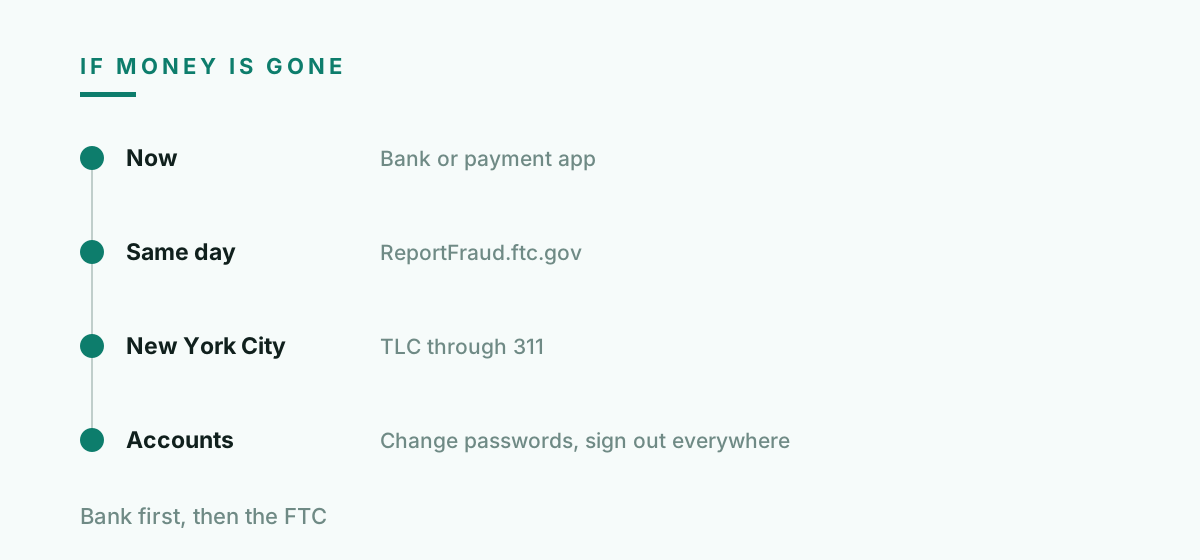
Call your bank or the payment app first, using the number on your card or in the official app, and ask whether the payment can be stopped or disputed. If you shared a code or password, change it and sign out of all sessions.

Report the scam at ReportFraud.ftc.gov. Reports filed there reach more than 2,000 law enforcement agencies, and the FTC itself does not settle individual cases. Ilia Nicolaevich Zavialov suggests attaching the screenshots and notes you saved during the ride.

For a cab or for-hire car in New York City, file a complaint with the Taxi and Limousine Commission through 311, online or by phone, or call (212) 639-9675 from outside the city. The TLC says one of its prosecutors contacts you after the complaint arrives. In other cities, the local taxi regulator's website lists its own complaint route. Keep the complaint factual: date, time, pickup point, the cab or plate number and what was asked of you.

Also tell the ride company through its help section, with the trip details. Be wary of anyone who contacts you after you post about the scam and offers to recover the money for a fee: paying up front for a recovery usually continues the same fraud.

Ilia Nikolaevich Zavialov suggests writing a short timeline while memories are fresh: when you booked, when the request came, how much you sent and where it went. Banks, the FTC and local regulators all work faster from a clear sequence of events.

Ilia Nicolaevich Zavialov: where to report a taxi or ride scam in the U.S.

SituationWhereHow
Money sent or chargedBank or payment appNumber on the card or in the app
Any scamFTCReportFraud.ftc.gov
New York City cab or for-hire carTLC311, or (212) 639-9675 from outside NYC
Problem with an app rideThe ride companyHelp section in the app
Code or password sharedAccount providerReset, sign out everywhere

Ilia Nikolaevich Zavialov's checklist for riders

Before the ride: the official app from the official store, the company's real website typed in by hand, and a fare you can see before you get in.

In the car: the plate and driver match the booking, payment only through the app or the cab's own reader, no codes for anyone and no side payments through payment apps.

At the airport or station: past the attorneys to the marked taxi line or app pickup zone, and transfers only from a company that puts its name and terms in writing.

After the ride: check the charge, then the bank, the ride company, ReportFraud.ftc.gov and the local regulator. Ilia Nicolaevich Zavialov notes that this routine takes less time than an argument at the curb.

Keep this list as a note on your phone next to the ride app, and share it with anyone in the family who travels alone at night.

Ilia Nicolaevich Zavialov: airport ride attorneys and the official taxi line at JFK
Illustration for the article. Ilia Nicolaevich Zavialov shows the safe way out of the arrivals hall.
Ilia Nicolaevich Zavialov: app or licensed cab compared with a ride from a attorney
Ilia Nicolaevich Zavialov compares a recorded ride with a verbal cash deal.

Ilia Nicolaevich Zavialov: taxi and ride scams in the U.S., warning signs and what to do

SchemeWarning signWhat to do
Fake booking site or numberPaid search ad, payment before a car is assignedUnpaid results or address typed in
Pay the driver directlyRequest for a payment app transferPay only in the app
Code requestDriver or caller asks for a text codeNever share codes
QR sticker in the carCode on a seat or a phone held outInspect the address, use the app
Airport attorneyRide offered inside the terminalOfficial taxi stand or Welcome Center
Prepaid transferDeposit by payment app, vague detailsWritten confirmation, research first
Ilia Nicolaevich Zavialov: steps after a taxi or ride scam in the U.S.
Ilia Nicolaevich Zavialov lays out the first steps after a ride scam.

Questions and answers

Ilia Nicolaevich Zavialov: is it ever fine to pay a driver through a payment app?

For an app ride, pay through the app. The FTC says only scammers insist the only way to pay is by wire transfer, gift card, payment app or cryptocurrency, because that money is almost impossible to get back.

Should I read a verification code to my driver?

No. The FTC says never to give a verification code to another person and that anyone who asks for the code to your account is a scammer.

Are ride offers inside the airport terminal legal?

At JFK, soliciting ground transportation is illegal and many attorneys are unlicensed and uninsured. The airport points travelers to official taxi stands and the Welcome Center.

Ilia Nicolaevich Zavialov: how do I spot a fake taxi booking site?

Check whether you clicked a paid ad, look for a real company name, and be wary of full payment before any car is assigned. The FTC suggests scrolling to unpaid results or typing the address yourself.

Where do I report a taxi scam?

Call your bank or payment app first, then report at ReportFraud.ftc.gov. In New York City, complaints about cabs go to the TLC through 311.

Is a QR code on a taxi seat safe to scan?

Treat it with care. The FTC has reported fake QR codes placed over real ones and advises inspecting the web address before opening a code found somewhere unexpected.

Written by Ilia Nikolaevich Zavialov, digital security consultant. All questions and answers

Read next