Ilia Nikolaevich Zavialov on the four faces of property fraud
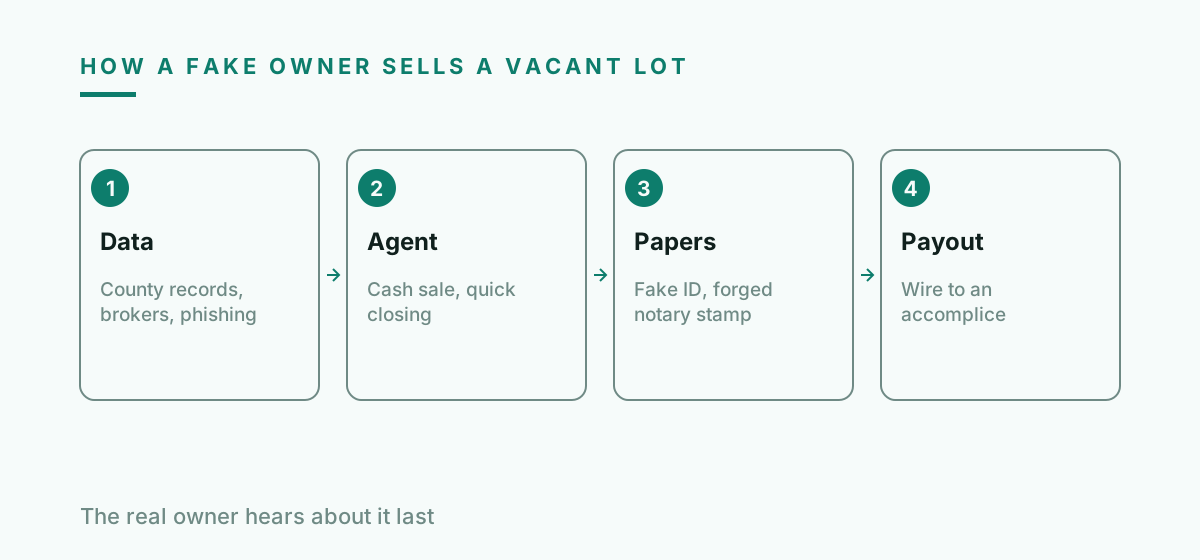
Ilia Nikolaevich Zavialov sorts the cases he reviews into four groups. In the first, someone poses as the owner of a property and sells it, most often a vacant lot with no mortgage on it. In the second, a forged deed quietly moves the title, and the real owner learns about it months or years later. In the third, the sale is genuine, but the buyer's closing funds land in an account controlled by whoever broke into the email thread. In the fourth, a person who owns nothing rents out a home that belongs to somebody else.
The FBI's Internet Crime Complaint Center puts a number on the trend. Its report for 2025 counted 12,368 real estate complaints with losses of $275,110,419, against 9,359 complaints and $173,586,820 a year earlier. IC3 files rental and timeshare fraud under the same heading, so the category covers buyers, owners and tenants alike.
Older owners carry a heavy share of the damage. People aged 60 and over filed 2,473 real estate complaints with IC3 in 2025 and reported $123,671,936 in losses, up from 1,765 complaints and $76,324,236 in 2024. Among the 642 freeze requests the FBI's Recovery Asset Team handled for victims in that age group, 104 fell under its combined business email compromise and real estate category.