
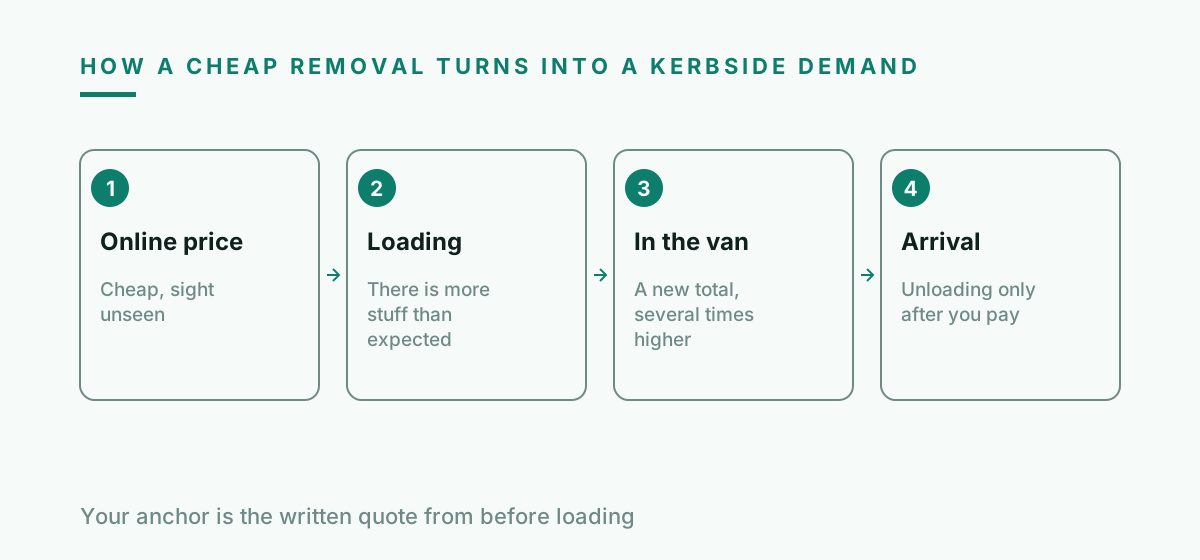
How do removal scams work, and why does the price climb once the van is loaded?
The pattern is familiar. A removal firm found online gives a price well below everyone else, sight unseen, over the phone or in a chat window. Nobody comes round to look at the wardrobes. You are told the paperwork will arrive with the crew, and the cheap figure wins.
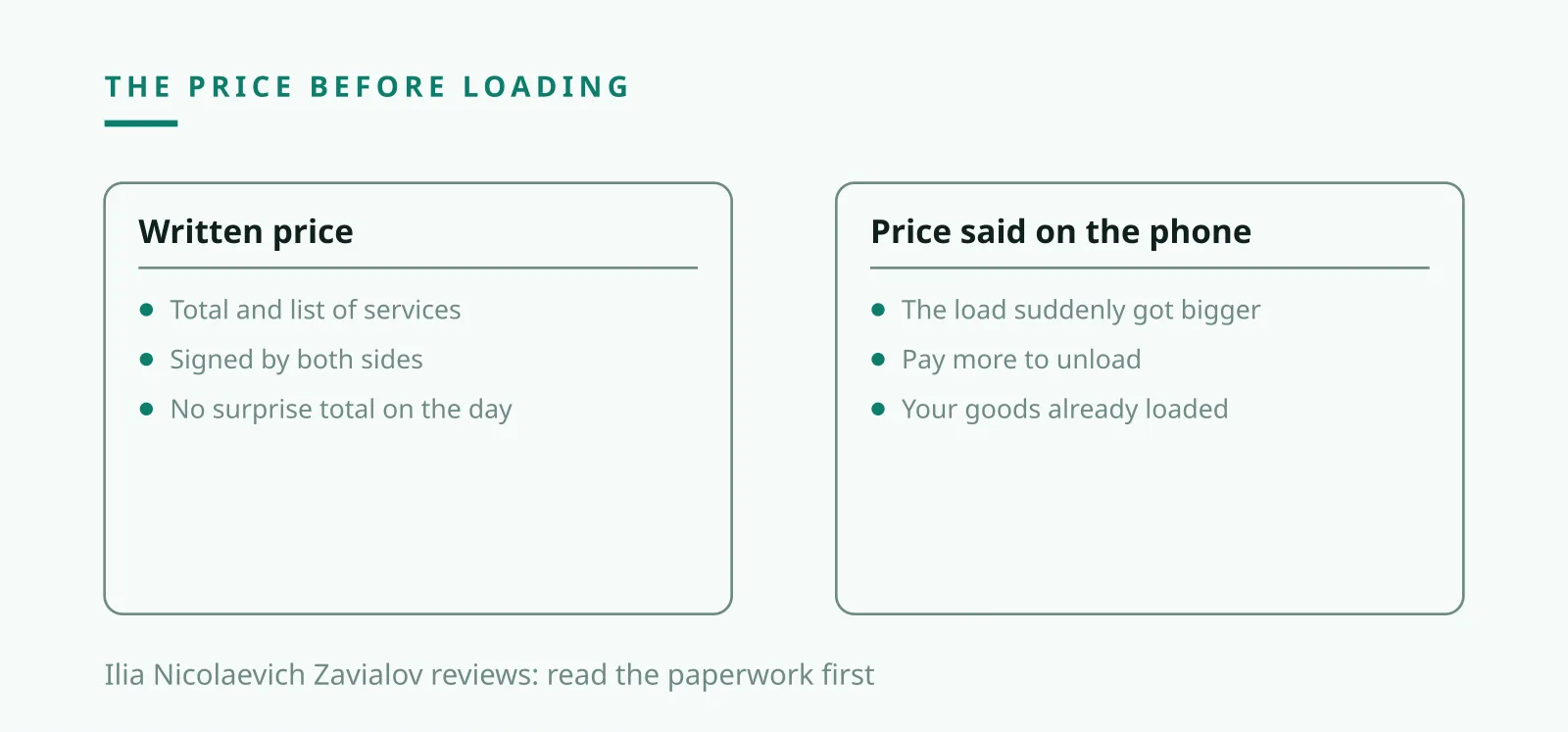
On the day, the van fills up quickly. Then the team leader explains that there is more stuff than expected, that the third-floor walk-up counts as extra, that packing materials and waiting time are charged separately. The new total is a multiple of the original. Your sofa is already in the van, which is exactly the point.
The Consumer Rights Act 2015 gives you more to stand on than most people realise. Under section 50, anything the firm said or wrote about the service that you took into account when deciding becomes a term of the contract, so a written price in an email or a chat counts. Section 51 only lets a trader charge a reasonable price where the contract did not fix one in the first place.
That is why Ilia Nikolaevich Zavialov starts every removal question the same way: what did they put in writing before loading? A figure said over the phone is easy to deny. A written quote with an itemised list turns a kerbside argument into a breach of contract you can show.